
The Men With Broken Faces
Victims of World War I

(Disturbing image below)
World War One has been called the First Modern War because it was the first major war in which many new technological weapons made their first appearance on the battlefield. It was the first war with tanks, aerial bombing, flamethrowers, and submarines. It was the first and last major war among advanced nations in which the combatants used poison gas.
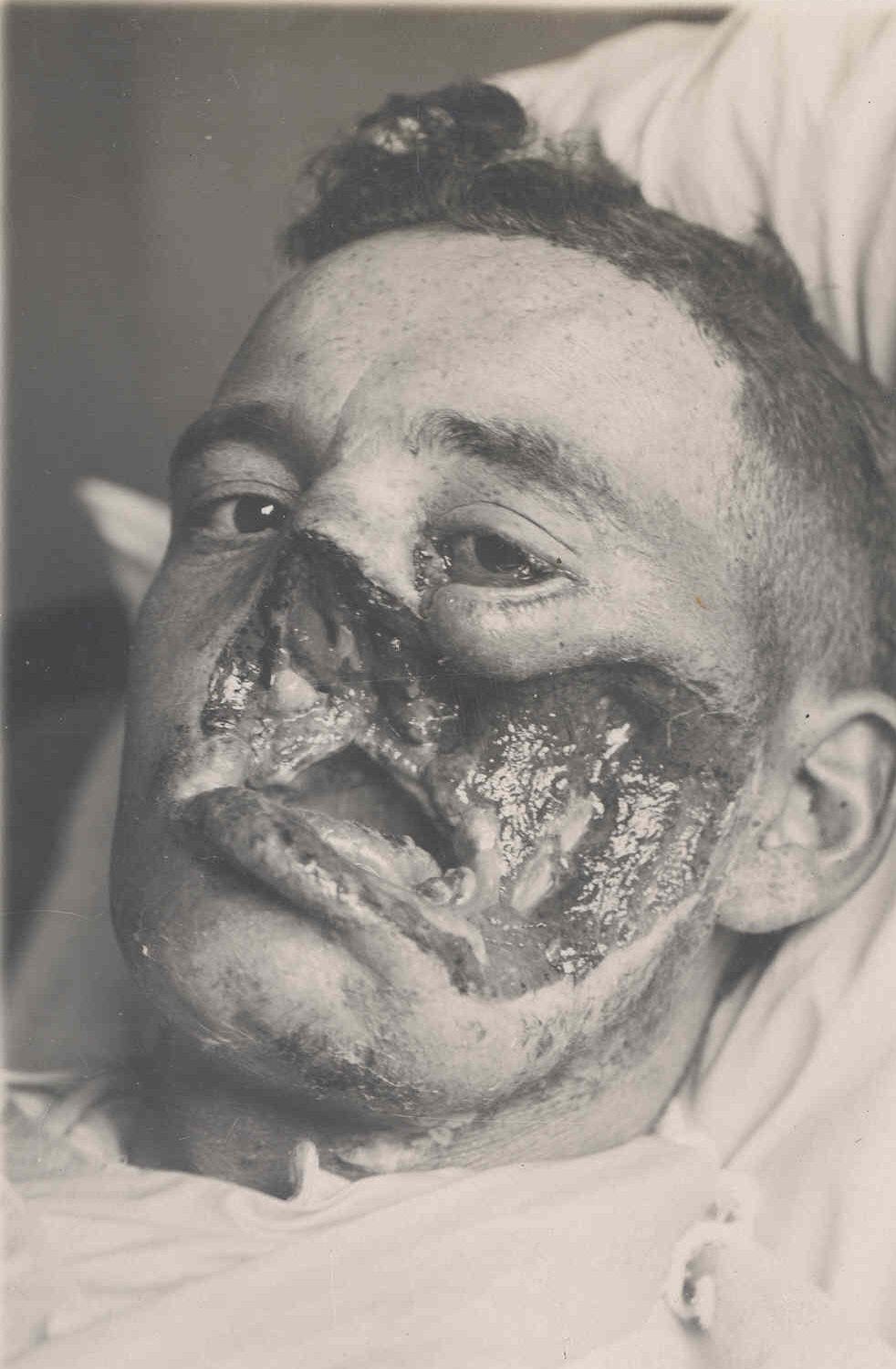
Tens of thousands of men came back from the war with faces mutilated by bullets and shrapnel. Many of them were mutilated beyond recognition. They were called Gueules Cassées, French for Broken faces.
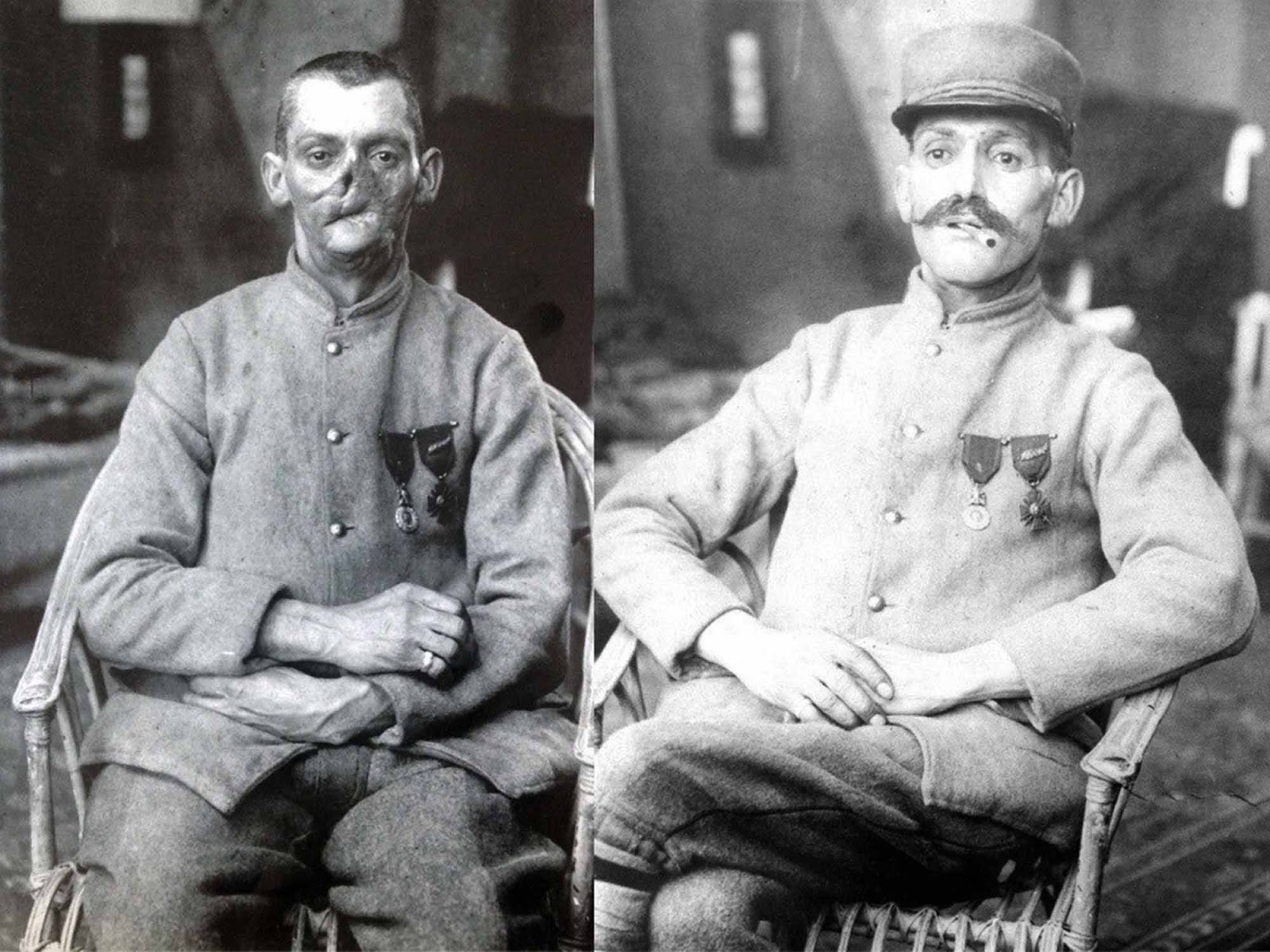
To go out in public, many of these men wore custom masks. Artists made masks out of tin, specially designed for each man’s face, and painted them to look like skin and facial hair. In the picture on the right, look just above the cheekbones and you can see that most of his face is covered by a tin mask. The term “tin nose” refers to this.
Last year I argued that homosexuals should refrain from kissing in public because it causes most people to feel disgust. Liam Robins wrote a response (warning, it contains a disturbing image), arguing that just because something causes your fellow citizens to feel disgust isn’t a good reason not to do it. Liam gave this example:
Imagine that, through no fault of your own, you are really ugly — so ugly that just seeing you causes people to wince. Are you morally obligated to stay in your house and never show your face in public? I don’t believe so, and I hope that Simon would agree with me.
We actually have a real life example of how people acted when they encountered exactly this situation. Many WW1 veterans, through no fault of their own, had extremely ugly faces — so ugly that just seeing them would cause most people to wince. These men did in fact hide their faces in public. I think it was a good thing that these men were able to get tin prostheses to make themselves more presentable. In fact, since the tin prostheses were reasonably affordable, I think they had a moral obligation to wear them in public. You generally have a moral obligation to make yourself presentable in public and not do things that would cause feelings of disgust in your fellow citizens.
Is this a callous thing to say about the WW1 veterans? Not at all! Holding disabled people to universal standards of conduct - i.e. the same standards to which you would hold “normal” people - is actually an important part of respect.
In modern culture, norms of decorum and presentability have deteriorated so much that some people find it absurd that someone with a disturbing facial disfigurement would cover their face in order to be considerate to their fellow citizens. But not that long ago, people did exactly that!
Fair enough, I give you credit for being consistent.
I will say: the case of disabled WWI veterans is a case where the interests of all parties basically agree. The public benefited from not having to look at disfigured veterans all the time, and the veterans themselves benefited from appearing as nicely as possible in public. Hence, it was in everybody’s interests for the veterans to wear these prosthetics.
This is not the case with gay men kissing in public, since the interests of the gay men and the interests of homophobes diverge.
This pulls me in a lot of different directions.